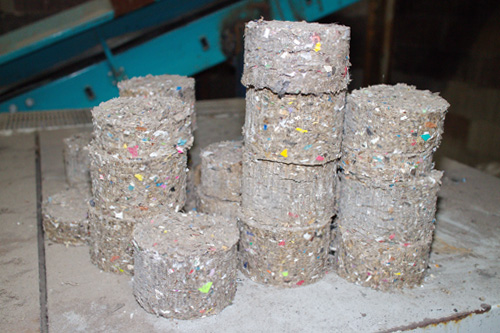
As landfills continue to take in municipal, commercial, and industrial waste, many organizations are looking for better ways to reduce disposal volumes, recover value from waste streams, and support more sustainable energy strategies. One option gaining attention is refuse derived fuel, commonly known as RDF.
Refuse derived fuel is made by processing the combustible portion of municipal solid waste into a usable fuel product. Instead of sending all waste directly to a landfill, facilities can separate recyclable and non-combustible materials, reduce the remaining combustible fraction, and prepare it for use in industrial boilers, cement kilns, furnaces, and power generation applications. This matters because landfills are a significant source of methane, a potent greenhouse gas. According to the EPA, municipal solid waste landfills are the third-largest source of human-related methane emissions in the United States. By converting suitable waste into fuel, RDF can help reduce landfill dependence while creating a practical energy resource from materials that may otherwise go unused.
Williams Patent Crusher supports waste processing and recycling operations with rugged size reduction equipment designed for demanding materials. Since 1871, Williams has engineered crushing, pulverizing, and shredding solutions for industrial applications, with more than 500 patents and trademarks to its credit. For facilities exploring RDF production, the right shredding and sizing equipment can play a critical role in creating a consistent, manageable feedstock.
What is Refuse Derived Fuel?
Refuse derived fuel is an alternative fuel produced from the combustible components of municipal solid waste. Depending on the waste stream, RDF may include processed paper, cardboard, textiles, plastics, wood, and other combustible materials that remain after recyclable, inert, or non-combustible materials are removed.
In many RDF systems, the process starts by separating out metals, glass, and other materials that are not suitable for combustion. The remaining combustible material is then shredded and may be dried, screened, classified, baled, or pelletized depending on the end user’s fuel specifications. RDF can be sold as loose processed material or compressed into pellets, bricks, or logs.
RDF differs from traditional fossil fuels because it is made from existing waste rather than extracted natural resources. Its sustainability profile depends on the composition of the waste stream and how it is produced and used. When RDF replaces coal, petroleum coke, or other fossil fuels in certain industrial thermal processes, it can help reduce fossil fuel consumption. RDF that contains biogenic materials, such as paper, cardboard, or natural-fiber textiles, may also help lower fossil-fuel-related carbon impacts in some applications.
For waste processors and energy-intensive industries, RDF offers three practical environmental advantages:
- It helps divert suitable combustible material from landfills.
- It support energy recovery from waste that may not be practical to recycle.
- It can reduce reliance on virgin fossil fuels when used as a substitute fuel in properly designed industrial systems.
The Process of Producing RDF
The process of producing refuse derived fuel can vary depending on the incoming waste stream, the desired fuel quality, and the end-use application. However, most RDF production systems follow the same basic sequence: collect, sort, shred, condition, and prepare the fuel for use.
- Collection: First, waste is collected from municipal, commercial, or industrial sources. This material may include household waste, packaging waste, paper, plastics, textiles, wood, and other mixed materials.
- Sorting: Waste is then sorted to remove materials that can be reused or recycled, along with non-combustible materials such as glass, metals, stones, and other inert items.
- Reduction: Next, the combustible fraction is reduced in size. Shredding is one of the most important steps in RDF production because it turns bulky, inconsistent material into a more uniform feedstock that can be handled, conveyed, screened, dried, stored, and combusted more efficiently.
- Conditioning: After shredding, the material may be dried to reduce moisture content. Moisture control is important because excessive moisture can reduce heating value and make fuel handling more difficult. Depending on the operation, the processed material may then be pelletized or otherwise densified to create a more consistent RDF product.
Williams Patent Crusher equipment can support the size reduction and preparation stages of RDF production. Industrial shredders can break down bulky waste materials into more manageable sizes, while hammer mills can further reduce and condition material to support downstream processing requirements.
How Can RDF Be Used?
Refuse derived fuel is used primarily as an alternative energy source in industrial and energy applications. Common end uses include:
- Industrial boilers
- Furnaces
- Cement kilns
- Power plants
- Waste-to-energy facilities
One of the most common applications for RDF is co-processing in cement kilns. In this setting, RDF can partially substitute traditional fuels used to generate the high heat required for cement production. Cement plants can use various waste-derived fuels, but the fuel must meet specific quality, particle size, moisture, and feeding requirements to perform reliably.
RDF may also be used in waste-to-energy and power generation applications. Instead of combusting mixed waste directly, processors can prepare a more consistent fuel product by removing non-combustibles and reducing the remaining combustible material to a controlled size. This can improve handling and help the fuel meet the requirements of the combustion system.
What are the Advantages of Refuse Derived Fuel?
Landfill Reduction
One of the most significant benefits of RDF is landfill diversion. By separating and processing the combustible portion of municipal solid waste, facilities can reduce the amount of material sent to landfills. This can help extend landfill life, reduce disposal pressure, and create value from waste that might otherwise be buried.
Reduced Greenhouse Gas Impact
When organic waste decomposes in landfills under anaerobic conditions, it generates methane. The EPA notes that methane from municipal solid waste landfills represents both an emissions challenge and a lost opportunity to capture and use an energy resource. RDF production can be part of a broader waste management strategy that reduces landfill reliance and supports energy recovery.
Increased Energy Security
RDF gives industrial users another potential fuel option. For facilities working to reduce dependence on conventional fossil fuels, RDF may help diversify the energy mix. This can be especially valuable for energy-intensive industries that need reliable heat sources and are evaluating alternative fuels as part of long-term operational planning.
Cost-Effective Fuel Potential
Because RDF is made from waste-derived material, it may offer economic advantages in the right market conditions. However, cost-effectiveness depends on several factors, including waste availability, fuel quality, processing costs, transportation, landfill fees, energy prices, and end-user requirements. A European Investment Bank review notes that the RDF market is driven by energy costs, suitable waste availability, landfill or incineration fees, CO2 pricing, fuel quality, and security of supply.
Creating RDF: Williams Patent Crusher’s Solutions
Producing a reliable RDF product starts with effective size reduction. Mixed waste can be bulky, inconsistent, abrasive, fibrous, wet, or contaminated with unexpected materials. That makes equipment durability and application-specific design especially important.
Williams Patent Crusher offers industrial shredding and hammer mill equipment that can help prepare waste streams for RDF production.
Industrial Shredders
Williams industrial shredders are designed for demanding recycling and waste processing applications. The company produces rugged shredding equipment, including primary shredders and Ripshear® shredders, to reduce materials to the needed size.
In RDF production, shredders can be used to:
- Break down bulky waste
- Improve material flow
- Prepare waste for sorting and separation
- Create a more consistent feedstock
- Support downstream drying, screening, or pelletizing
Hammer Mills
Williams hammer mills are industrial size reduction machines that use impact crushing, grinding, and shredding to reduce material into smaller pieces. Hammer mills can serve as primary, secondary, or tertiary crushers depending on the application. For RDF production, hammer mills may be used to further size and condition pre-shredded material so it can meet handling or combustion requirements.
Williams hammer mills can support RDF processing by helping facilities:
- Reduce particle size
- Improve feedstock consistency
- Prepare material for densification or combustion
- Support high-volume industrial processing
- Match equipment configuration to specific material requirements
Start Turning Waste into Fuel with Williams Patent Crusher
Refuse derived fuel offers a practical way to recover value from combustible waste, reduce landfill dependence, and support alternative fuel strategies for industrial operations. By collecting, sorting, shredding, drying, and preparing suitable waste materials, facilities can create a fuel product for use in cement kilns, boilers, furnaces, power plants, and other thermal applications.
The success of RDF production depends on consistent preparation. Shredding and sizing equipment must be durable enough to handle challenging waste streams while producing material that meets downstream requirements.
Williams Patent Crusher provides industrial shredders, hammer mills, and custom-engineered size reduction solutions for waste management and recycling applications. Whether you need to process municipal solid waste, prepare material for fuel production, or improve the efficiency of your recycling operation, Williams can help you evaluate the right equipment for your application.
Discuss Your Recycling Needs with Williams Patent Crusher
Contact Us